



EB-5 Investor Visa: U.S. Residency in as Little as 90 Days
EB-5 New Policy: Skip the Green Card Queue
No English or Academic Requirements
New Policy Mandate $800,000 USD Minimum Investment
One Application Secures Green Cards for the Entire Family
Program Introduction
Introduction to EB-5
The EB-5 Immigrant Investor Program, established by the U.S. Congress in 1990 under the Employment-Based Fifth Preference (EB-5) category, grants green cards to foreign investors who fund projects that create American jobs. This initiative directly links immigration eligibility to economic growth through capital investment and employment generation.
Investors and Families Earn U.S. Green Cards by Funding Approved Projects That Create 10 American Jobs
Two Investment Models of EB-5:
-
1. Direct Investment Option: Requires investors’ active management role in daily operations.
-
2. Regional Center Model: Indirect investment through approved intermediaries; no management involvement required.
New EB-5 Regional Center Policy
The EB-5 Regional Center Program was renewed through September 30, 2027, with a landmark provision reserving 32% of its annual 10,000 visas for backlog-free categories. These set-aside visas receive priority processing and are exempt from existing backlogs, allowing applicants under the reformed program to avoid multi-year waits.
%
Reserved for Rural Projects
%
Set Aside for High-Unemployment Areas
%
Allocated to Infrastructure Initiatives
Who Qualifies for the New EB-5 Program?
International students with temporary visas such as F1, H-1B, J1, OPT, CPT, L-1, etc.
Families with U.S.-Born Children
Parents Planning to Accompany Children Studying in the U.S.
Those Seeking U.S. Immigration Without Other Viable Options
Flexible Eligibility Requirements
No academic/English/job restrictions, as long as you can prove that the investment funds are legitimate.
Stable Policy with Dedicated Processing Under New Rules
EB-5 applications filed under the new law receive priority processing—no waiting lines or backlog delays.
Fast-Track ‘Green Card’ Benefits for the Whole Family
Applicants unlock ‘Green Card Lite’ status in 3-6 months, granting work, study, and living rights in the U.S. for themselves, spouses, and children.
No Visa Backlog + Dual Filing
U.S.-based applicants can concurrently file: I-526E, I-485, I-756, and I-131. EAD approval in as fast as 90 days enables unrestricted U.S. work/entrepreneurship.
Grandfathering Protection for New Applicants
The new policy includes a ‘Grandfather Clause’ to protect applicants’ interests. Investors who file before September 30, 2026 will have their EB-5 petitions processed under current rules—even if regional center policies change later—guaranteed by the U.S. Department of Homeland Security.
EB-5 Application Requirements
-
No language requirement
-
No academic requirements
-
No business background restrictions
-
Independent applications permitted from age 7
-
Invest $800,000 USD in a USCIS-approved project (TEA or infrastructure)
-
Simply demonstrate lawful source of investment funds
EB-5 Process
For applicants currently in the U.S.:
-
Sign the contracts
-
Identify investment projects and funding options, then remit investment funds to designated project accounts
-
File I-526E immigrant petition with USCIS. At the same time, file:
- I-485 for Adjustment of Status
- I-765 for Employment Authorization (EAD)
- I-131 for Advance Parole (reentry)
-
USCIS reviews all submitted materials
-
Receive EAD (Employment Authorization Document) approval letter within approximately 90 days
-
Receive physical EAD card or approval letter in approximately 3–6 months
-
Receive I-526E approval in 10–15 months, along with I-485 approval. You then receive a 2-year conditional Green Card
-
File I-829 Petition to remove conditions and apply for a Permanent Green Card
-
USCIS approves I-829, granting you a 10-year Permanent Green Card
If the applicant is not in the United States.
- Sign the contracts
- Identify investment projects and funding options, then remit investment funds to project accounts
- File I-526E petition with USCIS
- Receive I-526E Petition Approval Letter
- Case is transferred to the National Visa Center (NVC) for background checks
- Visa processing begins at the U.S. Consulate in Guangzhou
- Consulate schedules interview and medical exam
- Visa approval granted for the entire family
- Move to the U.S. within 6 months and receive a 2-year Conditional Green Card
- File I-829 Petition to remove conditions and apply for a Permanent Green Card
- USCIS approves I-829 Petition, granting a 10-Year Permanent Green Card
Long-Term Benefits of the EB-5 Program
Education, business, healthcare and global mobility — all secured
Pathways that lead to U.S. permanent residency or citizenship unlock advantages for families and businesses. Below are the main benefits our clients most commonly receive.
Educational security for children
Access to top U.S. schools and universities at reduced tuition fees. Better career opportunities through OPT and direct entry into the job market.
Business expansion opportunities
Launch or acquire U.S. businesses without extra permits; gain access to U.S. banking, investment markets and global credibility.
Healthcare access
Eligibility to access world-class healthcare systems and greater security for families via medical services and insurance.
Global mobility
Easier international travel with a U.S. passport after citizenship and fewer visa restrictions for business or leisure.
5 Key Mistakes EB-5 Applicants Must Avoid
Choosing Projects Without Proper Due Diligence
Many investors rush into projects based only on marketing material. Always request financial audits, feasibility reports, and USCIS history of approvals.
Overlooking Source of Funds Documentation
Incomplete records of income, sales, or inheritance often delay approvals. Applicants should prepare clear tax filings and legal paperwork.
Not Planning for Family Needs
Some investors fail to account for children aging out (turning 21). Early planning ensures dependents are included in the application.
Ignoring Exit Strategies
Every EB-5 project should have a clear repayment or profit-return plan. Investors must understand how and when their capital will be returned.
Applying Without Professional Guidance
Small errors in forms can result in months of delay. Licensed immigration professionals ensure compliance and accuracy.
Comparing EB-5 with Other U.S. Immigration Programs
Why choose EB-5 over other immigration routes
Versus H-1B Work Visa
H-1B requires employer sponsorship and has annual quotas. EB-5 is independent of employers and has no lottery.
Versus L-1 Business Visa
L-1 is temporary and tied to company operations. EB-5 leads directly to permanent residency.
Versus Family Sponsorship
Family visas depend on relatives in the U.S. and often involve long waiting periods. EB-5 is self-driven and faster for eligible investors.
7-Step Strategy for a Successful EB-5 Application
Assess Your Financial Position
Confirm liquid funds of $800,000–$1,050,000 USD and ensure documents proving the source of funds are available.
Identify Immigration Goals
Decide if your priority is faster residency, U.S. business expansion, or children’s education.
Select the Right Project
Compare regional center projects vs. direct investment. Evaluate job creation potential and financial safety.
Build a Documentation Package
Prepare tax returns, bank statements, property sales agreements, and business records.
File the Petition (Form I-526E)
Submit through USCIS with complete evidence. Expect a review period that may take several months.
Secure Conditional Green Card
Relocate with your family and enjoy U.S. residency benefits.
Maintain Compliance and Apply for Removal of Conditions
After two years, prove jobs were created and investment sustained to obtain a 10-year permanent green card.
Success Cases
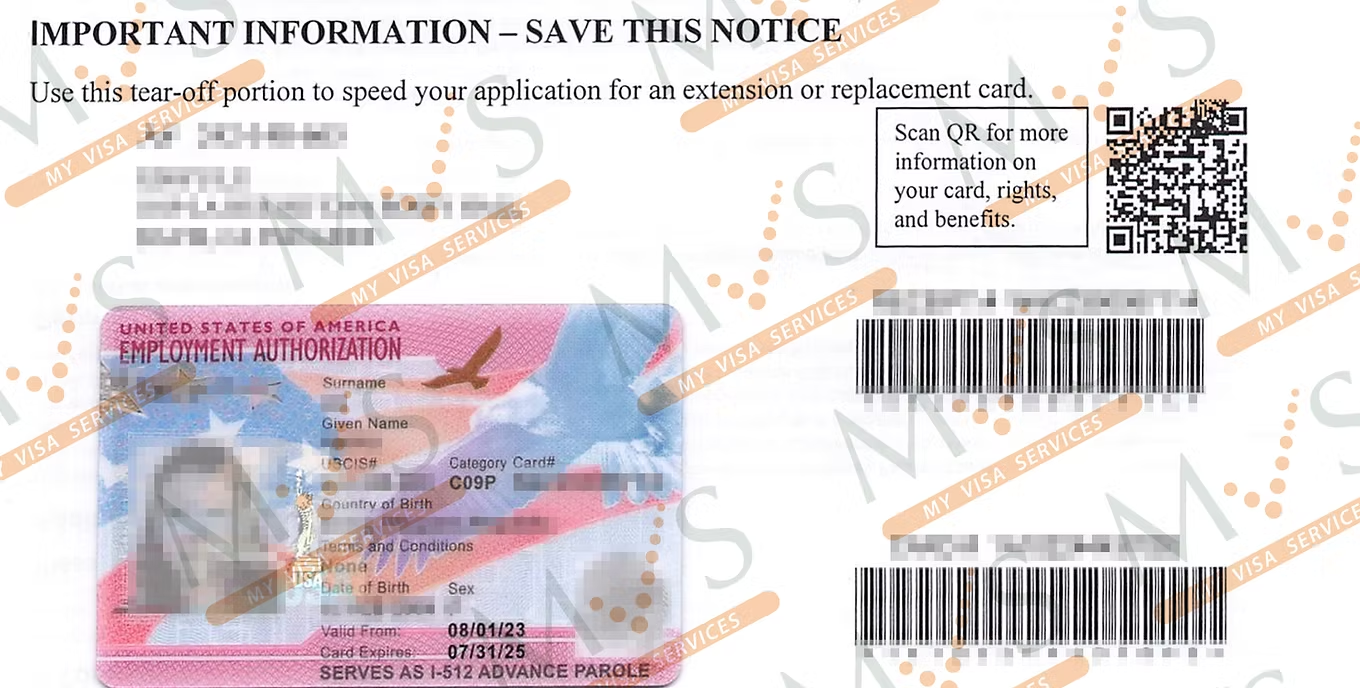
International Students
Approved in 3 months Combo Card
 .
.
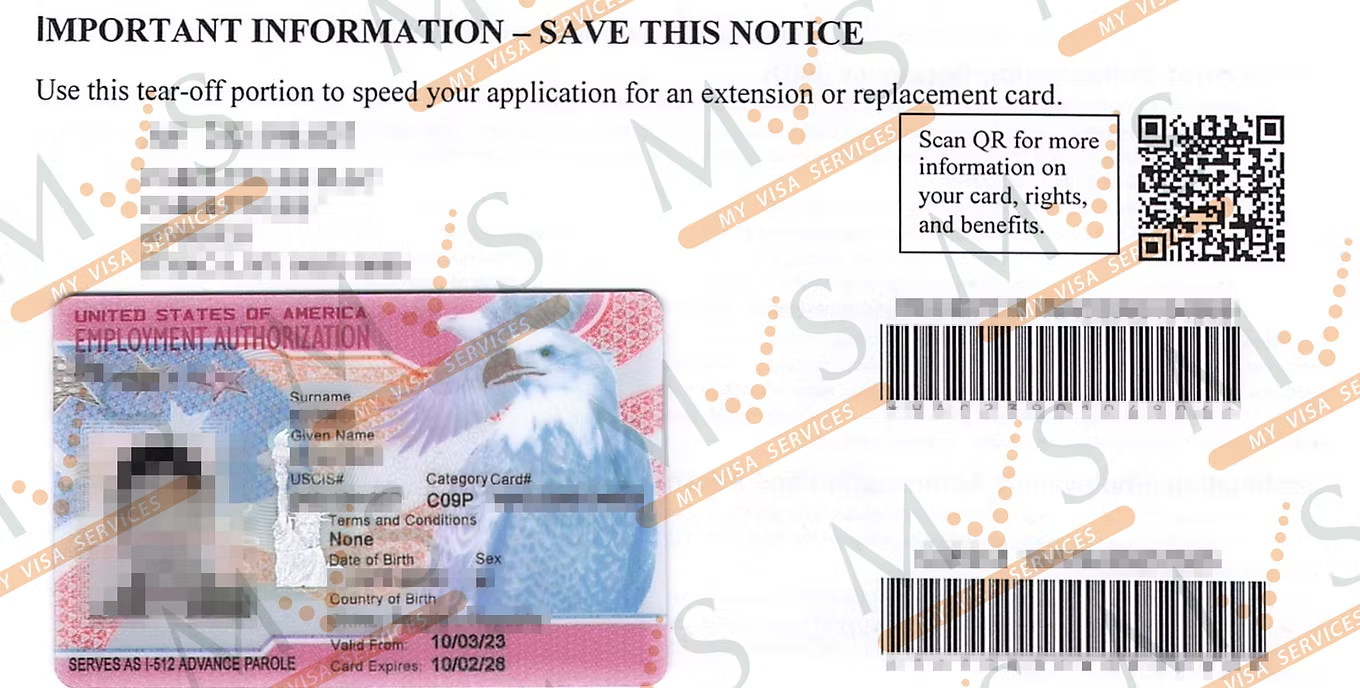
Multinational Executive
Combo Card Approved in 2 Months
 .
.
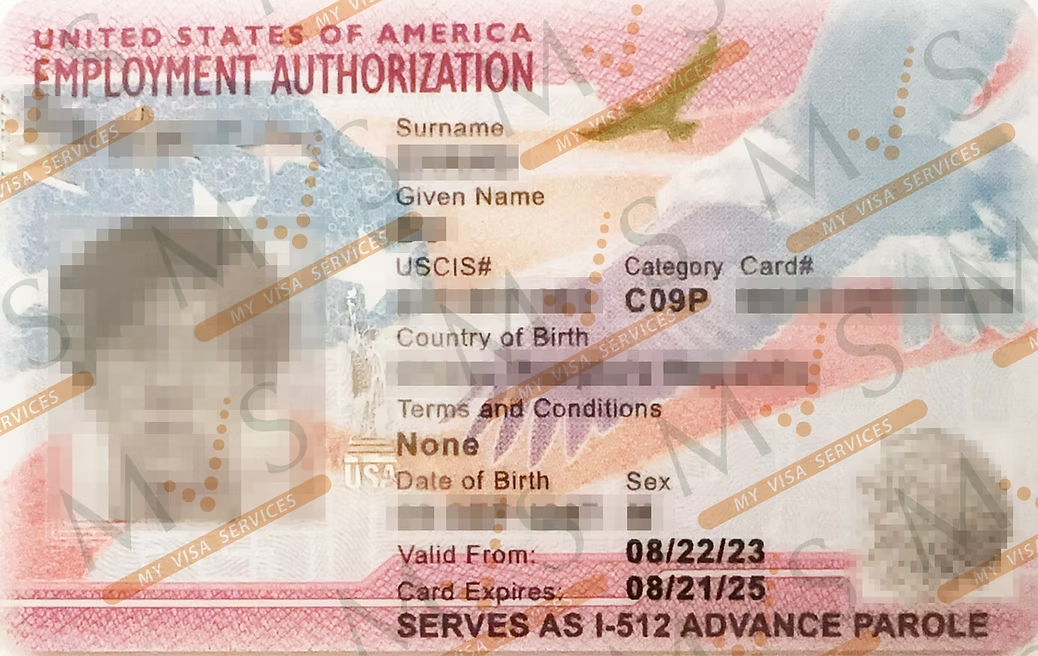
International Students
Combo Card Approved in 4 months
 .
.
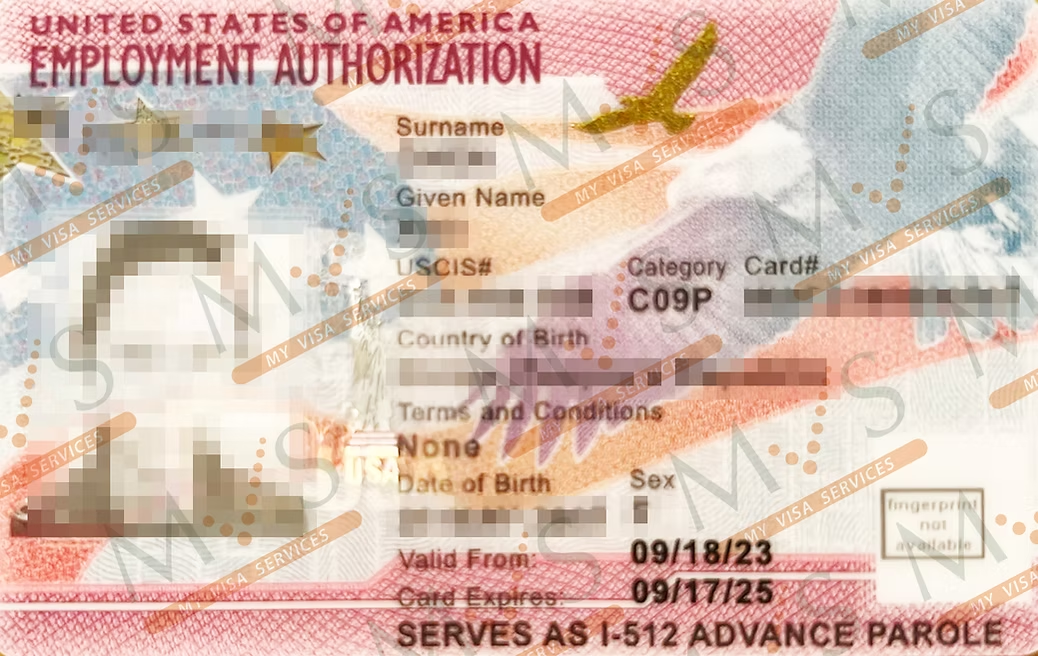
Accompanying Parent
Approved in 3 months Combo Card
 .
.
Advantages for Families Choosing EB-5
Children’s Future
Competitive edge in U.S. universities and careers.
Spousal Opportunities
Freedom to work, study, or pursue entrepreneurship without restrictions.
Generational Benefits
U.S. citizenship for children opens doors for global careers and mobility.
Economic Impact of EB-5 Investments
Job Creation
Across industries like real estate, healthcare, hospitality, and technology.
Development of TEAs
Rural and targeted employment areas benefit from strategic investments.
Global Capital Inflows
Strengthening U.S. infrastructure and economic growth.
Why Strategic Planning Matters
Tax Planning
Understanding U.S. tax obligations before relocating.
Education Planning
Aligning children’s enrollment with green card timelines.
Investment Diversification
Choosing projects that align with your long-term financial goals.
Citizenship Preparation
Mapping the journey from conditional residency to U.S. citizenship.
Q&A
Q: How Long Does the New EB-5 Process Take?
A: U.S.-based applicants typically receive EAD Work Permit + Travel Document within 3-6 months. The first approved EB-5 green card under new rules took just 11 months. Applicants urgently needing U.S. status should file while visa numbers remain available, using I-485 to secure legal status. If backlogs occur, those with pending I-485 can maintain work authorization and travel rights.
Q: Can applicants leave the U.S. while waiting for green card approval?
A: Yes! By obtaining Advance Parole (Form I-131 travel document) – valid for work, study, family or medical reasons. Most reasonable travel purposes are approved.
Q: Does the new EB-5 program risk policy changes?
A: The 2022 reforms include ironclad grandfathering: All petitions filed before September 30, 2026 are protected from future policy shifts. DHS cannot deny your case due to subsequent program changes.
Q: Can existing EB-5 applicants switch to the new program’s visa quota?
A: No. USCIS maintains separate processing tracks: Existing applicants must continue waiting in original queue; New investment + petition required for backlog-free processing.
Q: Is there a U.S. residency requirement for EB-5 conditional (temporary) green card holders?
A: Neither conditional nor permanent green cards require residency, but entry every 6 months is advised.
According to U.S. Department of Homeland Security (DHS) regulations, green card holders cannot remain outside the country for more than one continuous year and must enter the U.S. at least once annually. For those considering future U.S. citizenship or long-term permanent residency, we recommend entering every six months to maintain status stability—though there are no minimum daily residency requirements.
Q: Does USCIS review applicants during I-829 conversion to permanent green card?
A: When filing Form I-829 to remove conditions, USCIS conducts two key verifications: First, the invested capital must have been fully deployed into the project with visible construction progress (though completion isn’t required). Second, the project must demonstrate sufficient job creation through verifiable expenditure records. For investors, the requirements are straightforward: maintain the investment without withdrawal and comply with all entry requirements during the conditional green card period.